At the end of the South African wars in 1902 (always known by the people at the time as the Boer War) it was felt that a day should be set aside to celebrate the glorious empire.
The government was not agreeable to making it a public holiday, so it would be a day to raise the flag and hang up other patriotic bunting throughout the land. The first official, nationally observed Empire Day, was 24th May 1904. 24th May was the birthday of the late Queen Victoria.
It was decided that the main observation of the day should be aimed at school children. The afternoon was devoted to parades and speeches, telling the children of our great empire. The aims were quite specifically laid out:
“To remind children that they form part of the British Empire, and what it means to be sons and daughters of such a glorious empire. The strength of the empire will depend upon them, and they must never forget it.”
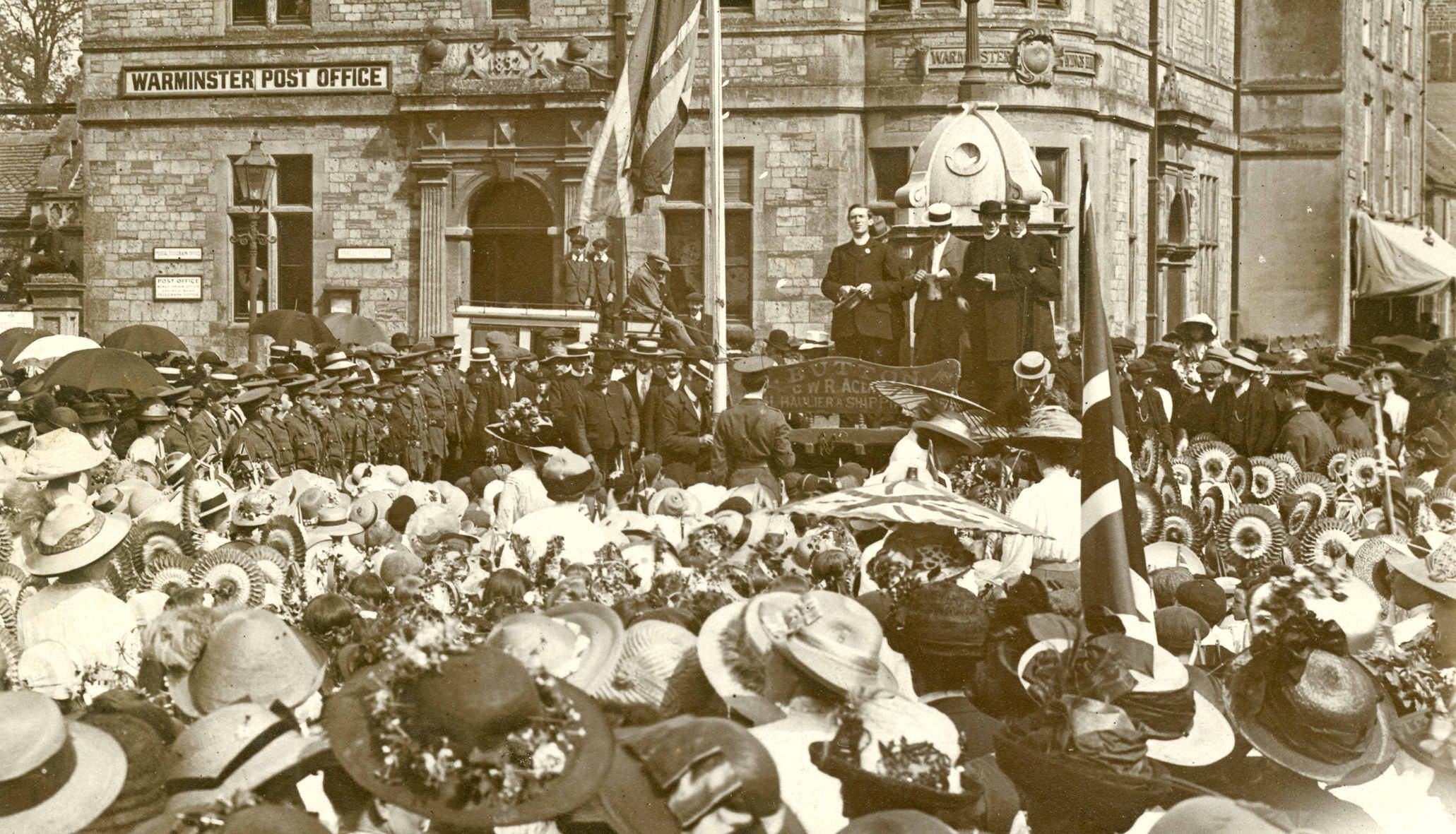
In the afternoon celebrations, the children would watch the raising of the flag and would give it three cheers. They would then listen to speeches given by the local ‘great and good’. They would sing the national anthem, cheer for the King, cheer for the Queen and then they could go home.
It is open to question how much the children enjoyed this afternoon. School leaving age before the First World War was 12, and large numbers of children did not stay in school as long as that. But perhaps it was better than lessons.
The museum has copied out the report that was in the Warminster Journal, 30th May 1913, of the school celebrations of Empire Day 1913. If you are in the area of the library and you have a few minutes to sit and read, you will enter a time, only just over 100 years ago, that is so utterly different from today. These good people could not know that their world would never again be like 1913.
Ask at the Library reception desk for a copy to read.
Pictured: Empire Day 1913
Send us your news!
Help us keep your community connected and informed.
Do you have an interesting story you would like to share? Have you seen something you feel needs more attention? Get in touch with a reporter today!
✉️ Click here to get in touch with a reporterSupport Local Journalism
Help us keep your community connected and informed.
Local news is under pressure more than ever. For just £5 a month, you can support independent reporting that shares local stories, investigates the issues that affect you, and keeps residents up to date.
Choose a monthly subscription or a one-off donation to support independent journalism in Warminster.