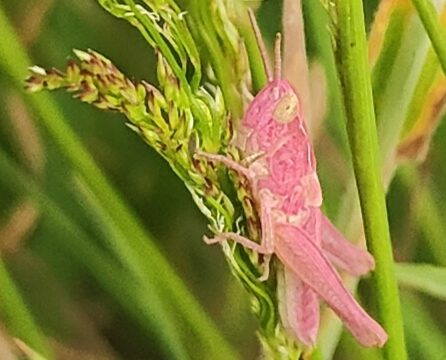
A rare pink grasshopper has been discovered at Damask Meadow by local nature enthusiasts campaigning against a proposed housing development at the site.
Pink grasshoppers are not a separate species but get their unusual colour from a genetic mutation called erythrism, which causes an overproduction of red, pink or orange pigmentation.
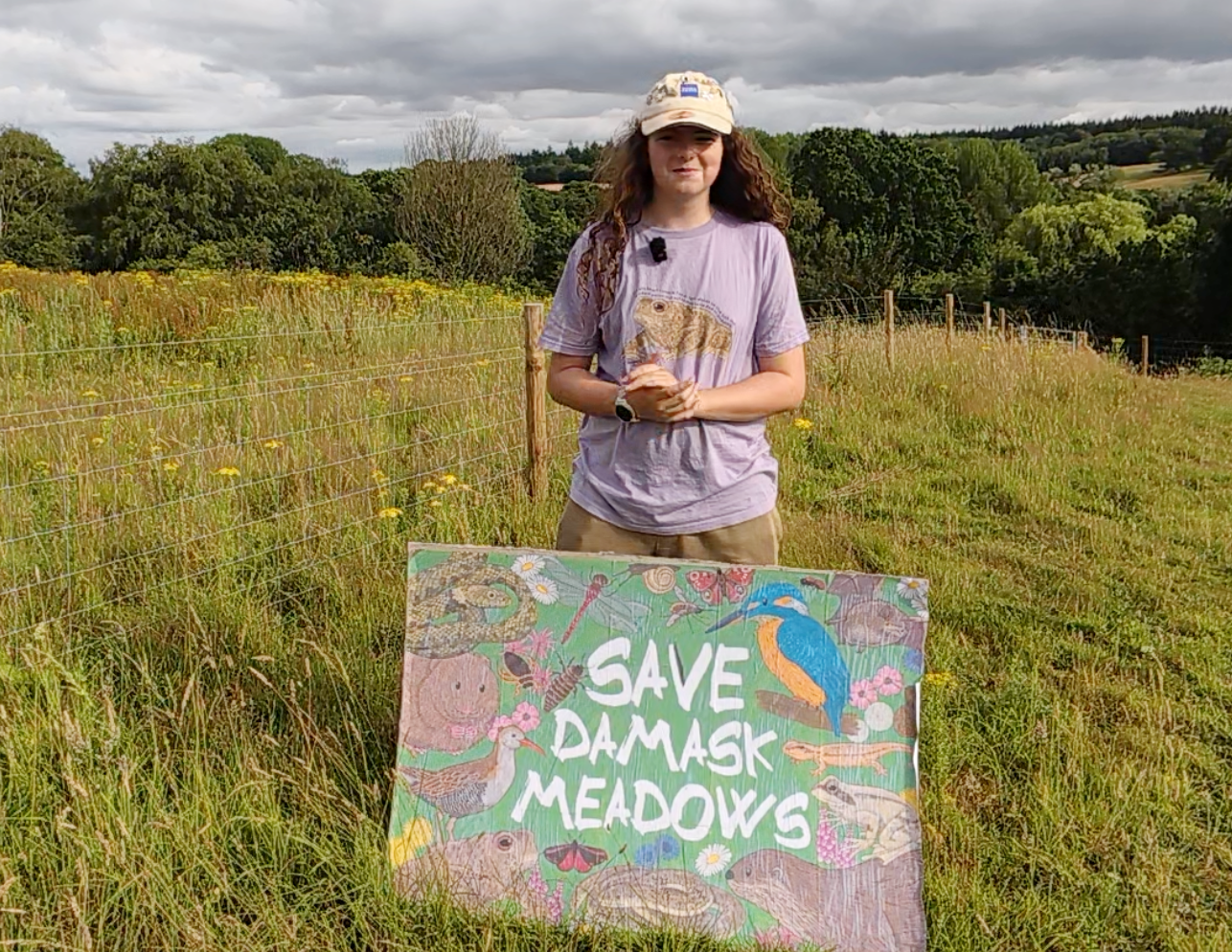
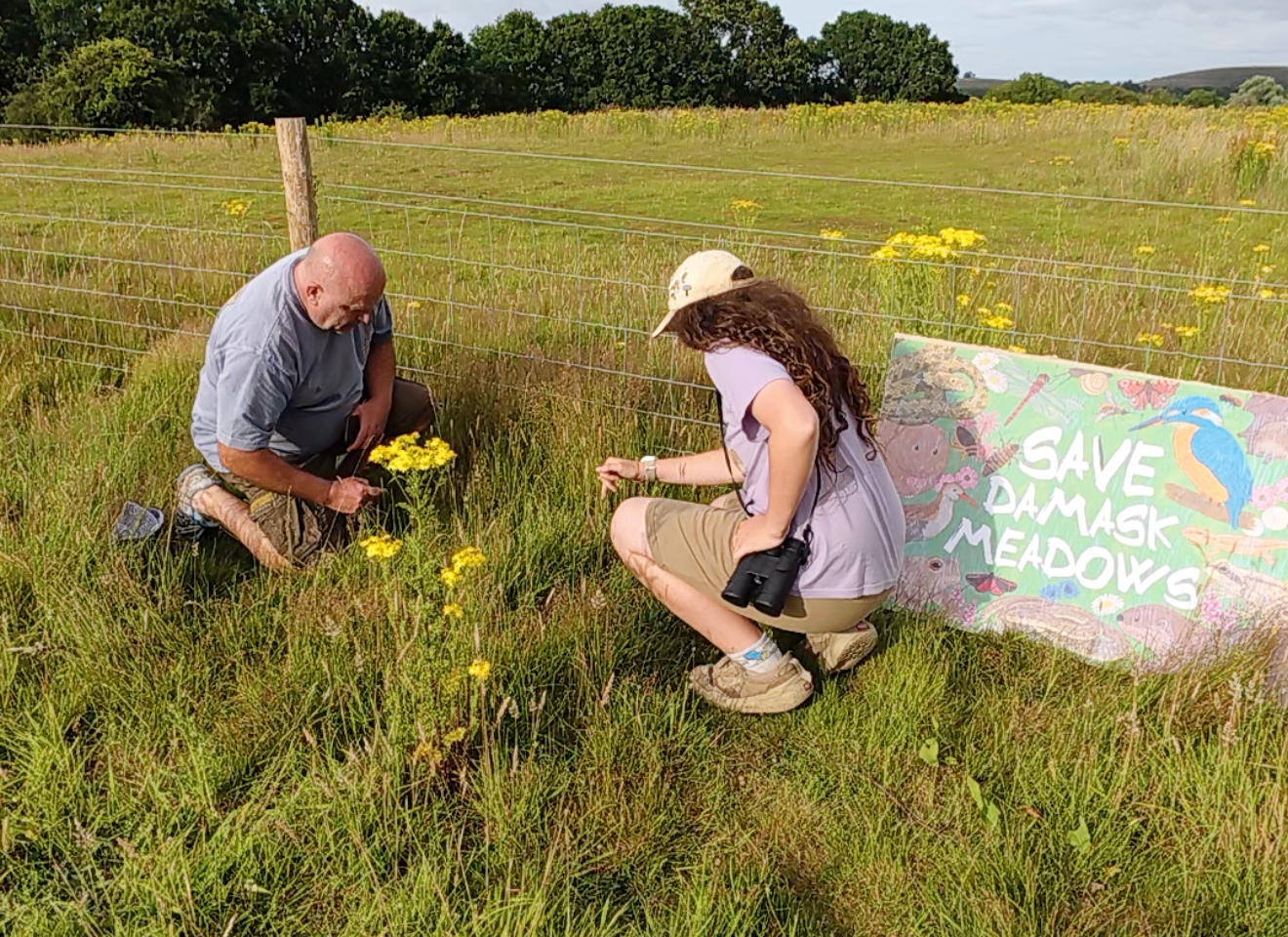
Ecologist Iain Perkins and 14-year-old conservationist Dexter Painter-Coates spotted the grasshopper while carrying out publicity for the Save Damask Meadow Campaign at the potential development site.
“Turns out it’s not a rare species, but it is a very rare find,” said Iain. “It’s in the same league as finding a four-leaf clover. Being pink, they get predated quickly and don’t often reach adulthood, so this is a once-in-a-lifetime find to recall in the future for a budding 14-year-old entomologist like Dexter.”
Iain said the discovery could be a “good omen” for the campaign to protect the meadow.
Sustainable Warminster says the land is an important wildlife corridor linking Smallbrook Meadows Nature Reserve with the surrounding countryside. The group says the site supports a range of species and is an important habitat for local biodiversity.
Residents have been campaigning against plans for 49 homes to be built at the site, with campaigners calling for the meadow to be protected. A petition calling for the site to be saved has attracted more than 1,500 signatures.
Warminster Town Council recently objected the planning application. Its Planning Advisory Committee raised concerns about the impact on biodiversity and the potential loss of habitat.
A decision on the application is expected to be made by Wiltshire Council by 7th September.