The extraordinary life of Dr John Falk, a former prisoner of war in Singapore and a much-loved Warminster GP, has been uncovered by a local historian who has shed new light on his wartime experiences.
The GP, who lived between 1910 and 1997, was held at a Prisoner of War (POW) camp at Changi in Singapore.
Celia Lane, who previously co-wrote the book Warminster in the Twentieth Century, has now researched his life.
She said, “There must be many people locally whose thoughts go to family, friends and people they have known who were caught up in the terrible war in the Far East with Japan.

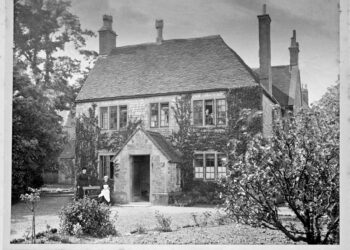
“Our thoughts go to Doctor John Falk, who lived at West House in Warminster for 40 years. He is remembered still with great affection, not only for his kindness and expertise as a GP, but also for the part he played in the cultural and political life of the town.”
John arrived as a young doctor to serve in general practice at Portway in Warminster in 1939. There, he met his wife Katharine when they were both house surgeons at University College Hospital, London, and they married in 1936.
In 1940, John was commissioned as a captain in the Royal Army Medical Corps and was sent to Singapore to Roberts Hospital in Changi. Katharine took his place in the practice in Warminster, despite having two small boys, Richard and Toby, by this time.
After the Japanese invaded Singapore early in 1942, a public appeal was posted which read: “FALK – Officially reported missing Malaya, John Anderson Falk, Capt. RAMC, husband of Irene Katharine Falk, 81 Portway, Warminster, Wilts, and son of George and Millicent Falk, Clifton, Bristol. Any information since 29th January gratefully received (no other letters).”
By this time Changi Hospital had become part of a prisoner of war camp and Dr Falk’s family were greatly worried about his wellbeing.
Celia said, “The camp commandant was Japanese and the warders were Korean. They were brutal to the prisoners. However they were glad to use the doctors’ medical expertise when needed. John was the only person who was brave enough to tell the Camp Commandant he had syphilis.

“Using great ingenuity the doctors in the hospital were able to carry out complicated surgery using implements made from sharpened bamboo. John operated with an eminent surgeon, Julian Taylor who had specialised in brain surgery in London.
“There were also engineers imprisoned in the camp who were able to make splints and artificial limbs from parts of damaged vehicles and even small aircraft which were lying around. These the doctors designed and fitted. The workshop was successfully hidden from the guards.
“Keeping up the morale of the prisoners was helped by holding concerts and John still had his flute. They were able to grow vegetables, which continued to be an occupation until old age, and they captured wild bees.”
From August 1943 until May 1944 John was held at Selerang, and for the last year he was at Kranji POW Camp which was particularly notorious because the prisoners there were starving.
John wrote “Red Cross parcels of food and comforts were issued at Kranji Camp soon after the Japanese surrendered. These supplies might have been issued at an earlier date, but were evidently withheld.” John weighed just 6 stone when he got home.
His daughter told Celia, “There was always a pool of silence around his life during the war.” A rice bowl used to sit on the side. At the end of his life Polly picked it up. On the bottom was written ‘J.Taylor’.
If you have more information to share about Dr John Falk, you can email Celia on westho@talktalk.net